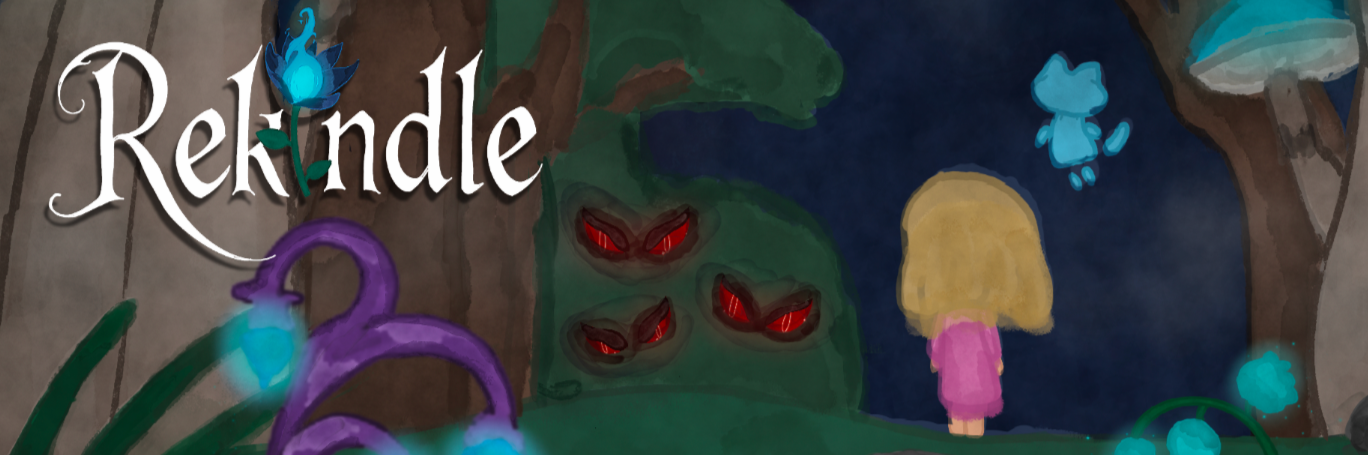

Rekindle is a short game made as a team project for the Overkill festival in Enschede, Netherlands.
In a team of 5 people, as the only designer, I was responsible for all the mechanics, levels, and interactions in the game, as well as the UI/UX aspect. I designed puzzles involving movement challenges, problem-solving, cooperation, and tested and iterated on those extensively.
The game is complete, and it is available on itch.io.
Rekindle is a cooperative game built over 3 months, for the purpose of being played during a games festival setting, therefore, I approached designing the experience of the game in a way that would lend itself best to that environment.
With that in mind, a few general points I decided on in the concept stages:
I followed those general points for the entirety of the design process, as they essentially define the design ethos of the project.
The mechanics make the design foundation of the game. In my process, in the context of a puzzle game especially, I find it useful to first conceptualize mechanics, so that I can then shape the content around them. In this case, I started with the basic mechanical principle that was established for this game, which is "only survive in the light".
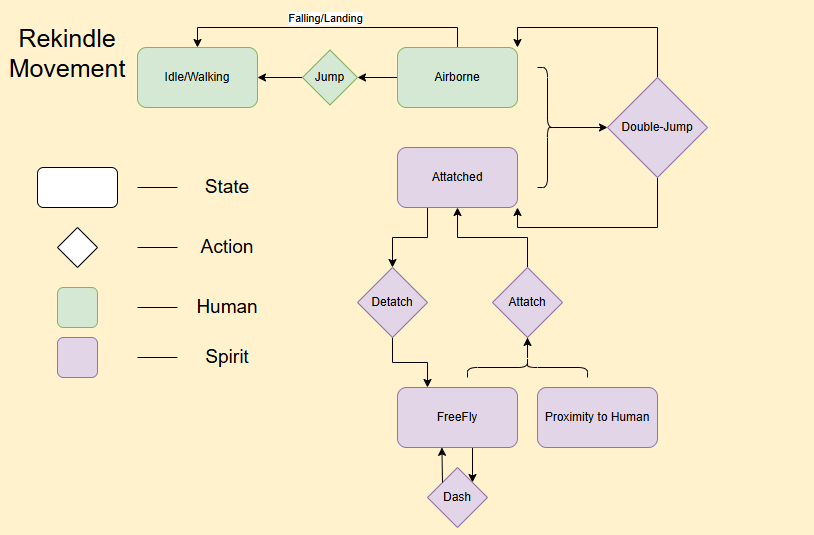
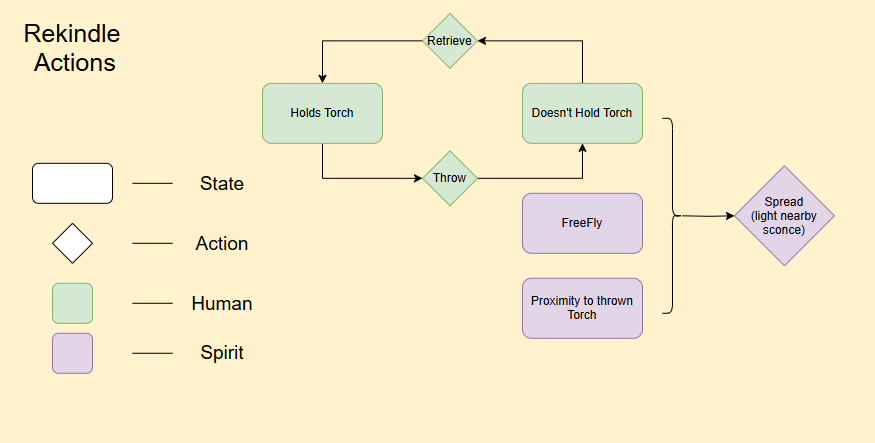
At this stage of the design process, I use diagrams to help illustrate to the rest of the team how certain mechanics and systems should be implemented. Examples of these diagrams can be seen below.
I came up with a number of mechanics during development, but through prototyping, player feedback and iteration, as well as the need to keep the game simple, the final game ended up with only a few of the most appealing ones.
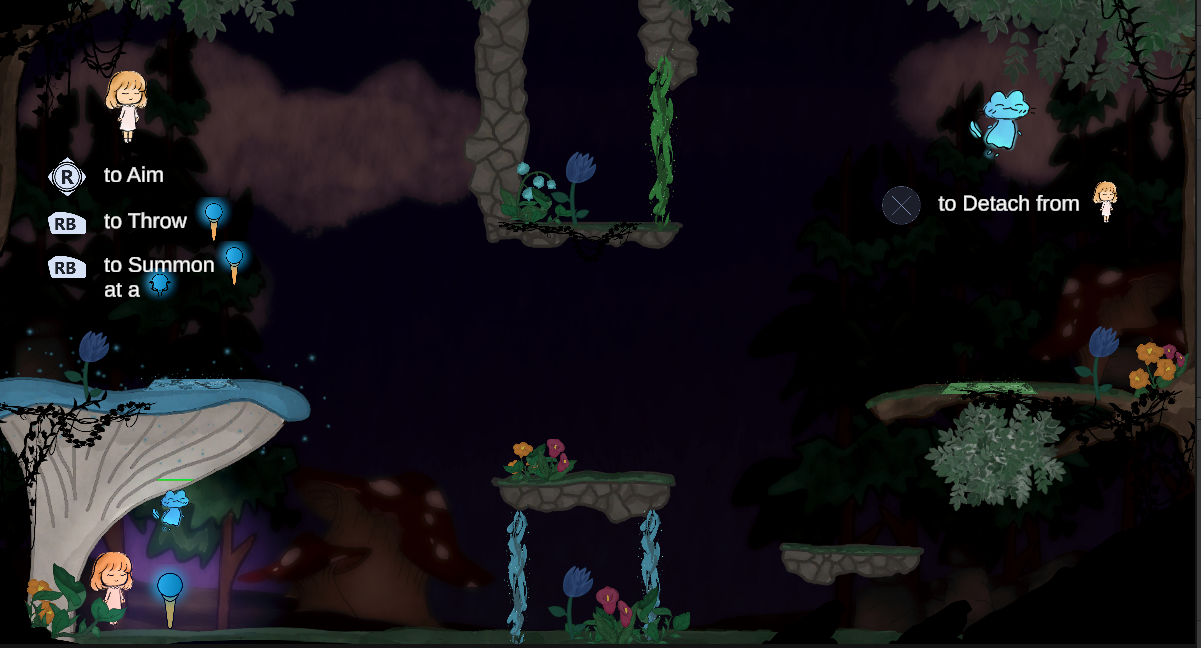
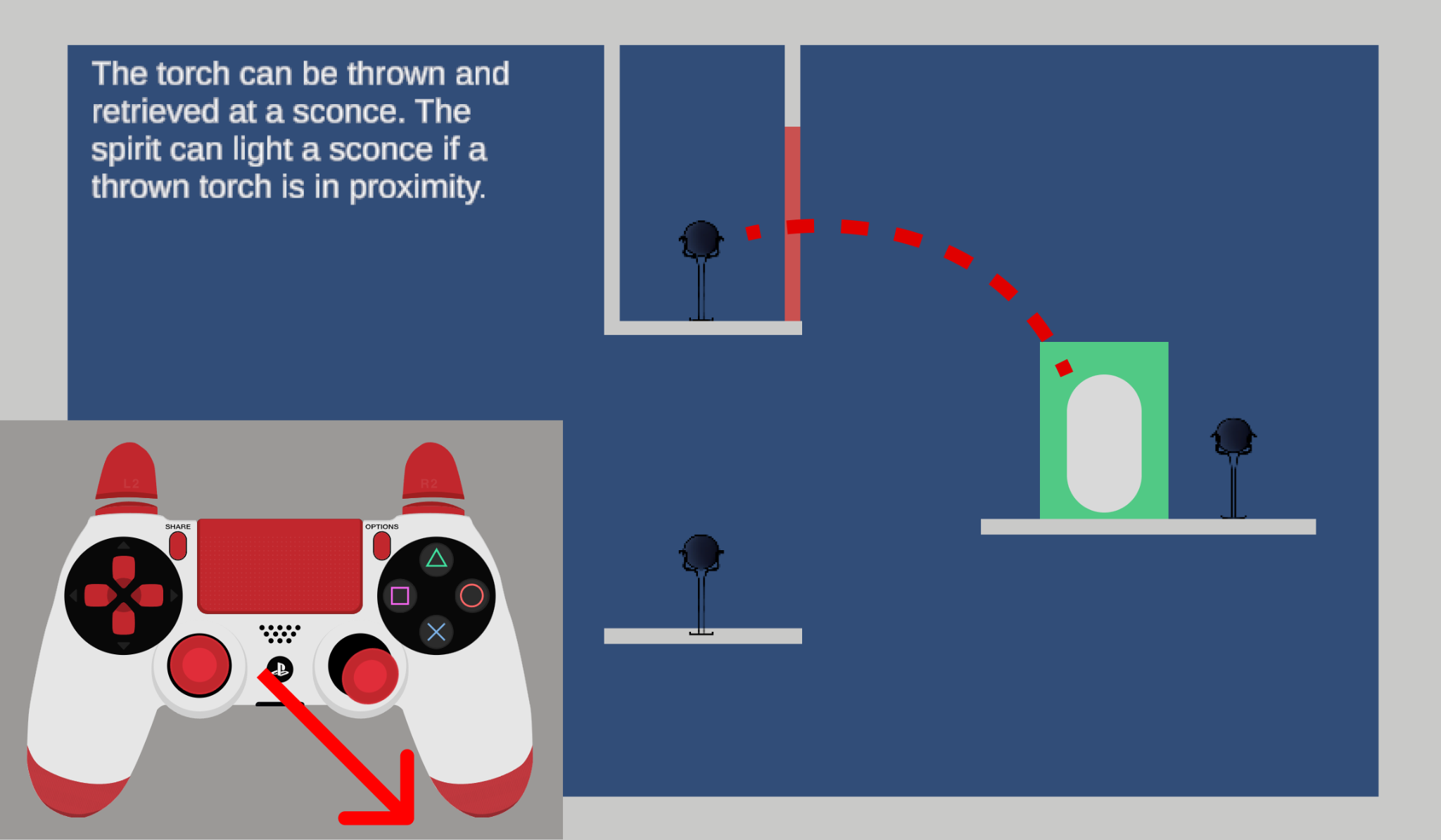
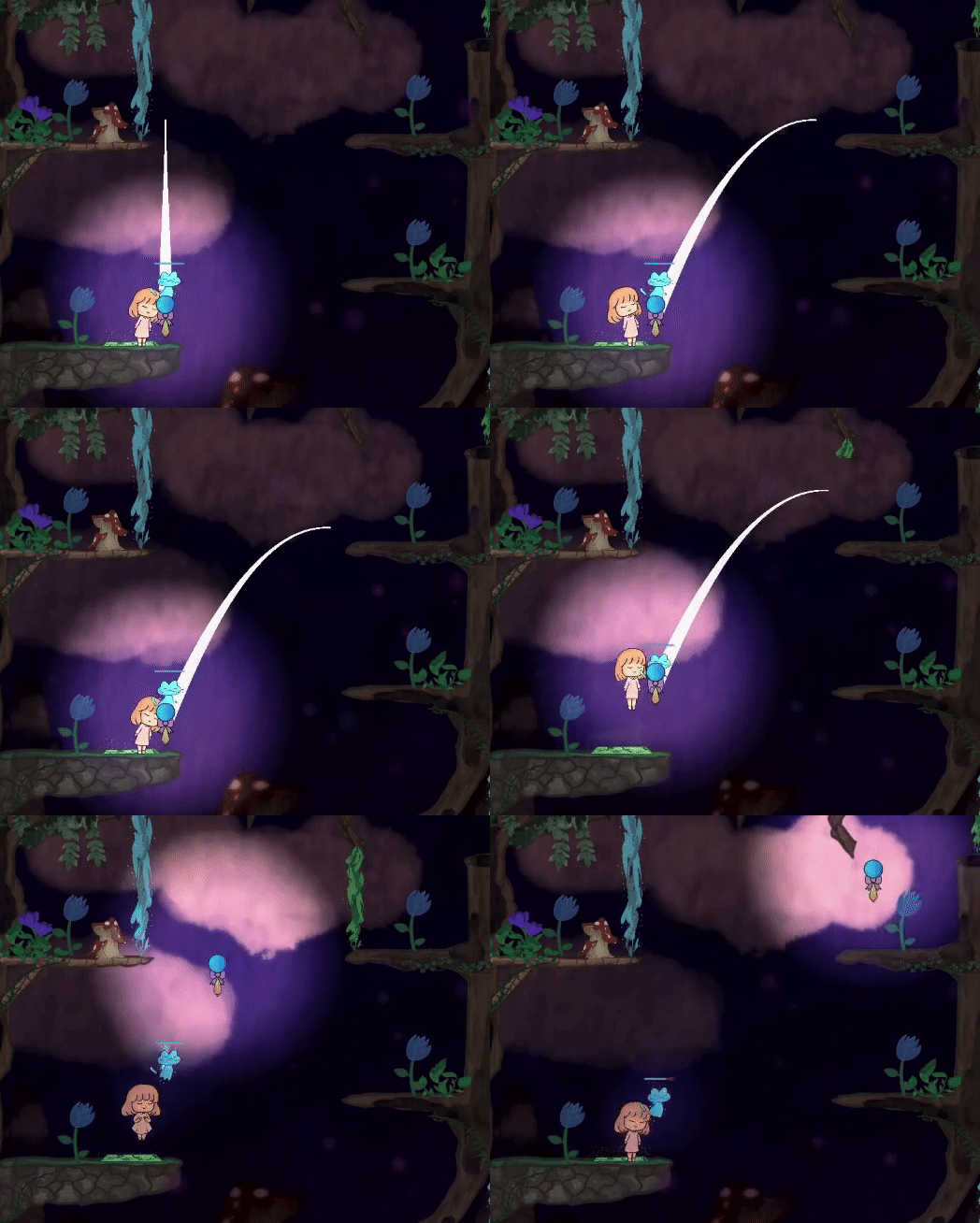
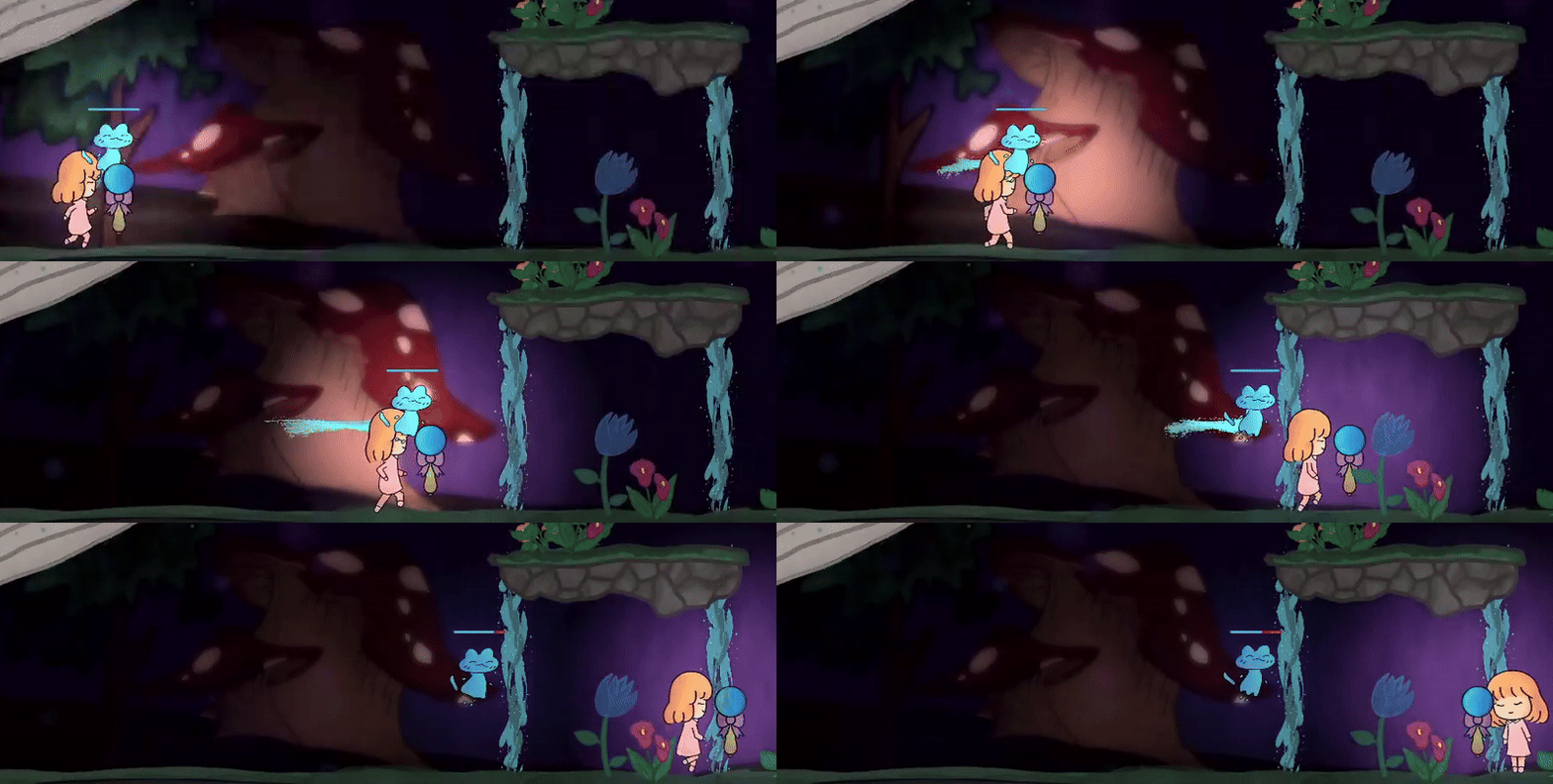
Sometimes, it's a lot more useful to represent a mechanic visually, in which case I either make a visual diagram (as seen below), or prototype it myself. In this project, that was the case with the Torch Throw, for example, represented below.
For Rekindle, I designed 3 levels focused around cooperation, movement and problem-solving. These levels were built to leverage the already decided mechanics, and pose fun, creative challenges, while also subtly teaching players how to progress.
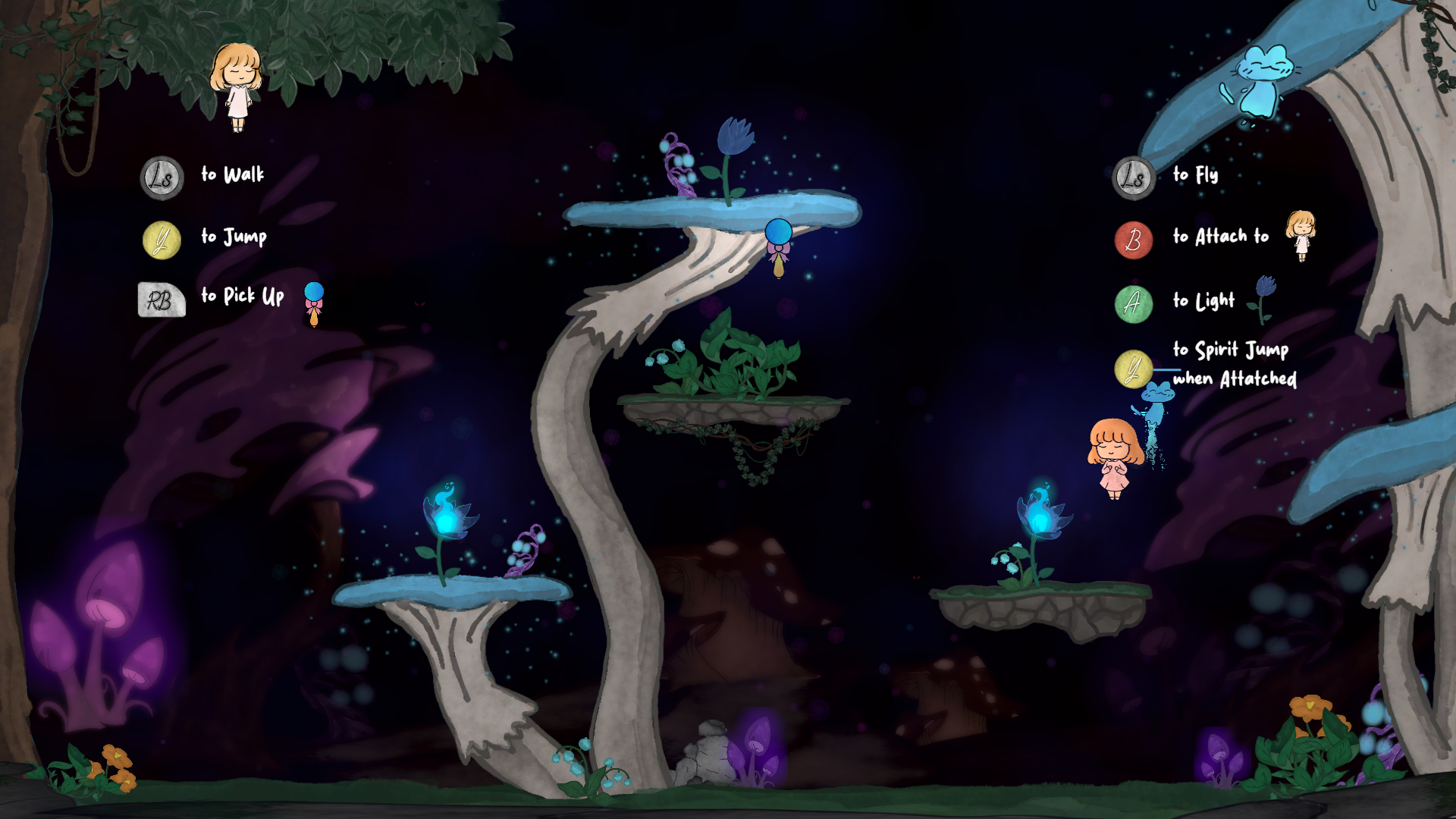
The first level, shown below, serves as an introduction to the most basic mechanics, as well as the completion requirements. It is not built as a challenge, but instead a teaching tool.
This level not only introduces the movement (including the cooperative aspect of it, which is required to complete it here), but also it establishes some pieces of the game's design language, like the flowers which the players need to light up to progress, for example. The level's layout also requires the players to stay together to reach the flowers, further emphasizing the core idea about light being the safe space. (It's worth mentioning that this is subtly thought via the mechanics themselves and fail conditions.)
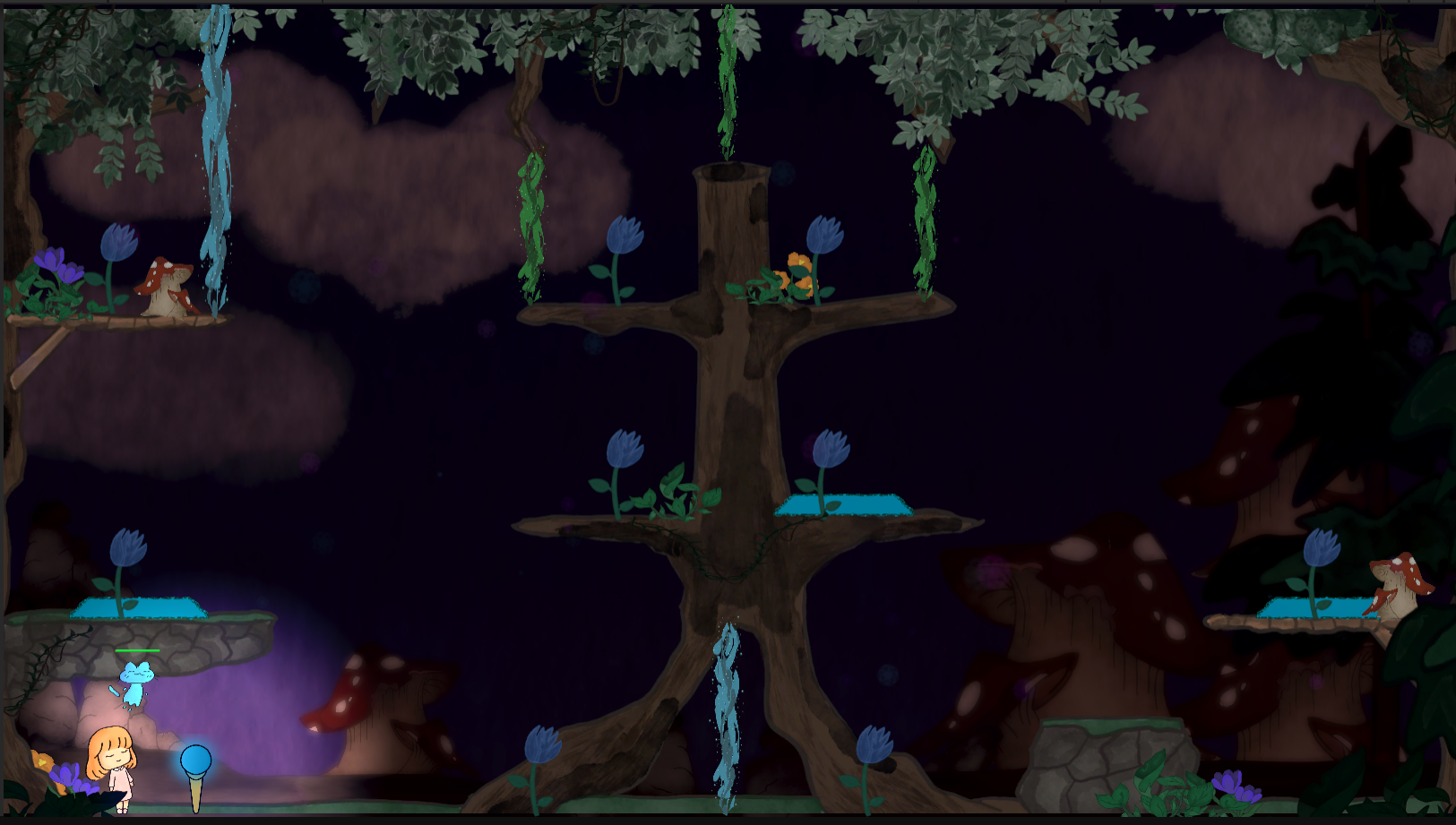
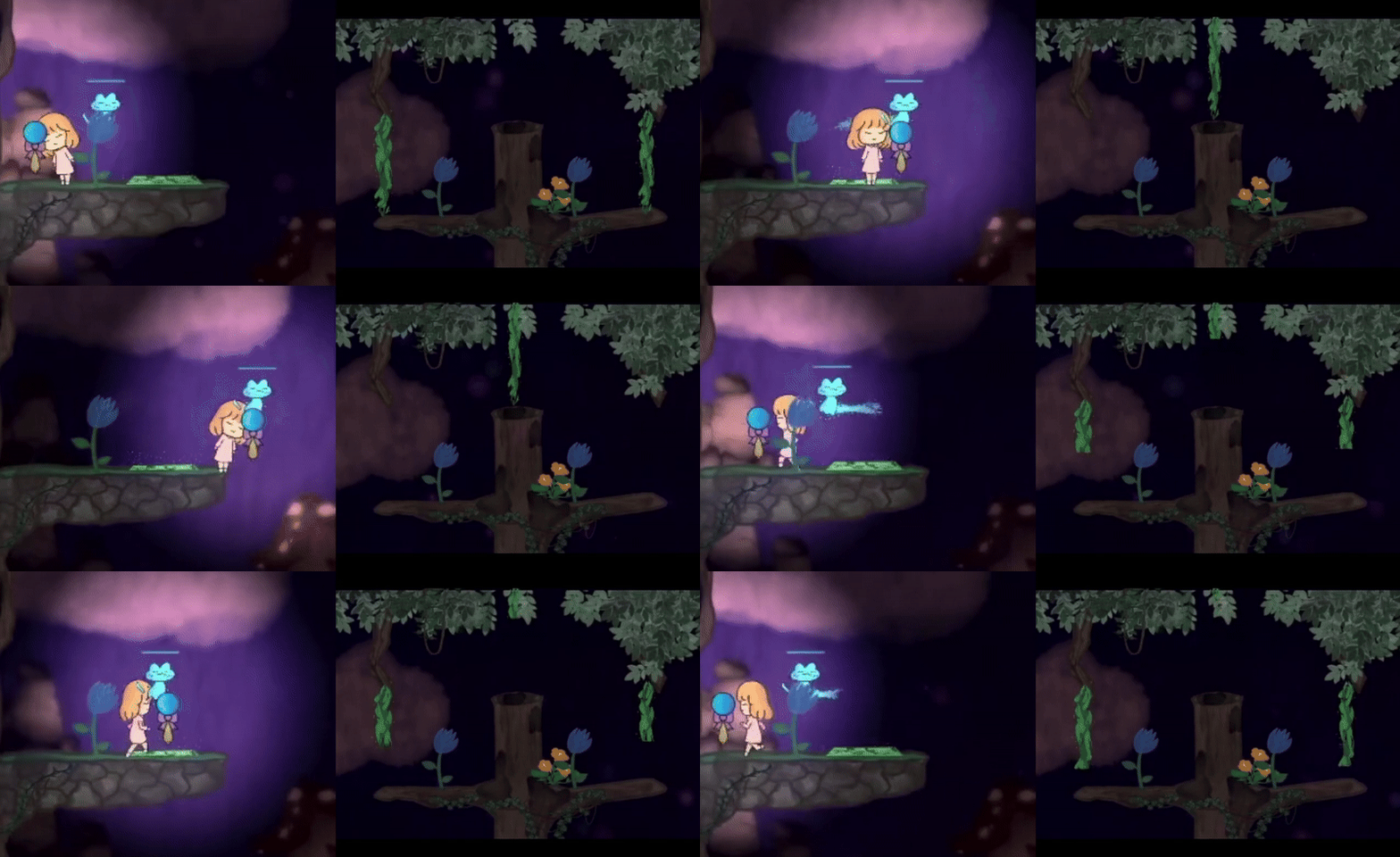
The second level introduces two new mechanics, those being the Torch Throw, and the Vines, which are a new level element. The purpose of the level is once again to teach rather than to challenge. (That being said, the level does test previously learned mechanics by requiring their use.)
The player is required to use both the Vines and the Torch Throw in order to progress, and the level is laid out such that those interactions become apparent as quickly as possible, giving the players ample opportunity to understand the mechanics. For example, the placement of vines on the bottom greatly increases the chance of players walking into them, which helps portray the mechanic. In the same way, the placement of buttons right next to level objectives naturally directs players to those locations.
Compared to the other two, the third level, poses a real challenge and is meant to test the abilities and cooperation of the players, by incorporating all the mechanics learned in the previous two levels.
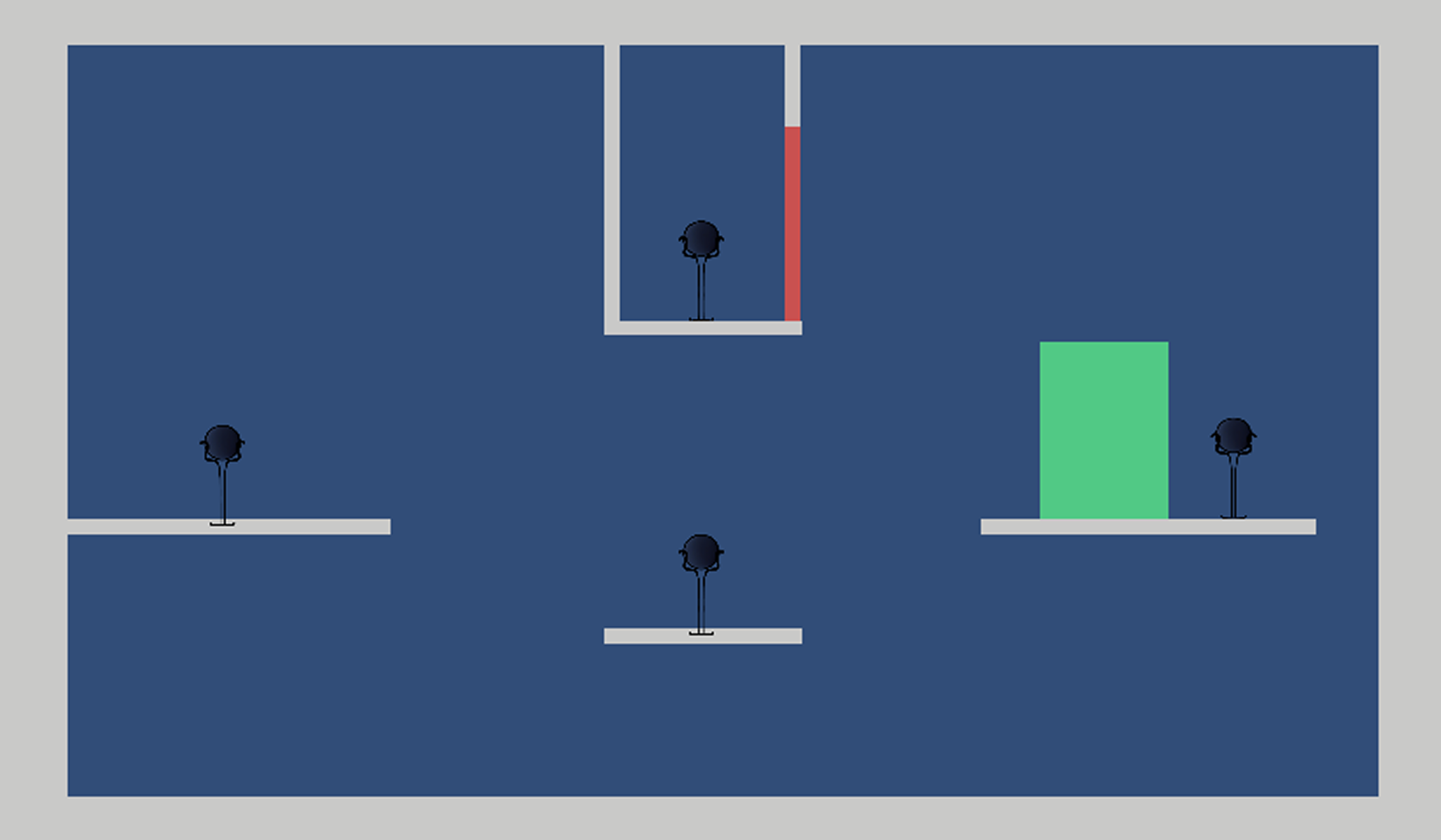
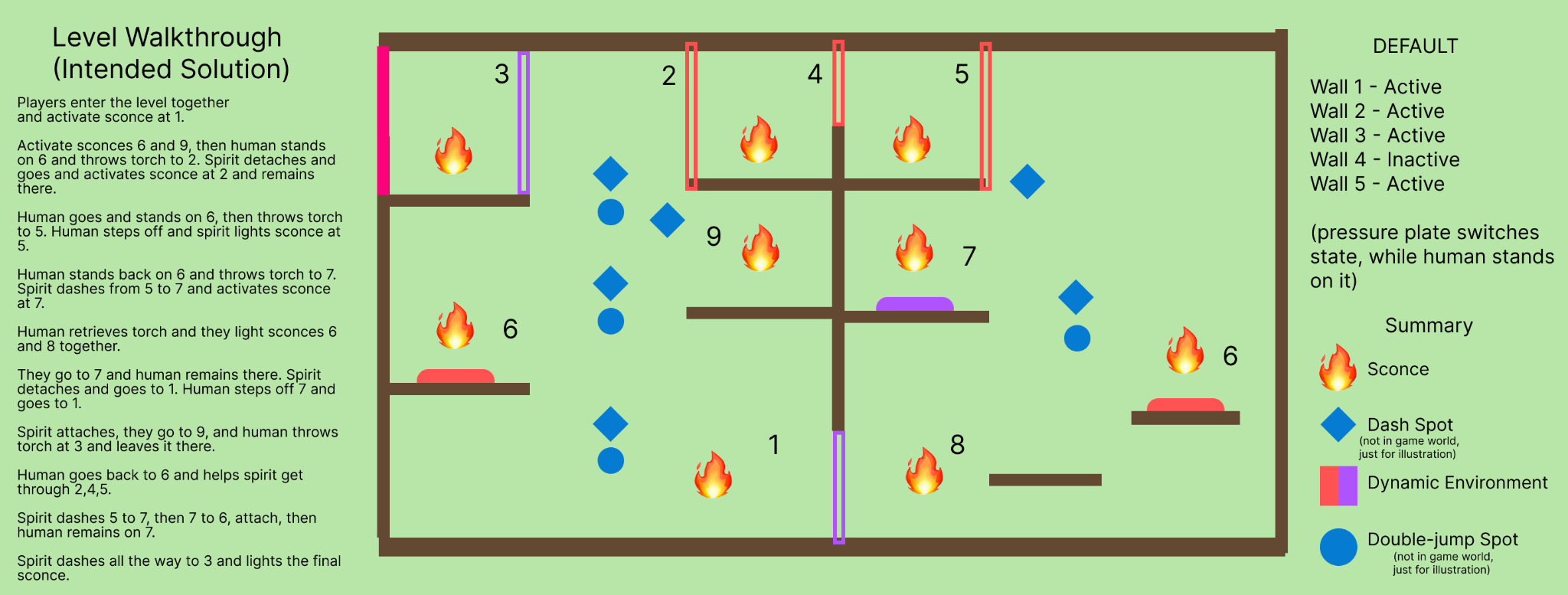
Furthermore, I went with the approach of designing the level as a diagram beforehand (seen below). There are multiple reasons for this, but most importantly, it allows for fast iteration and visualization, and that's incredibly helpful in the context of designing a puzzle where I have to consider the player thought process at every point.
The diagram is also necessary in a team environment when making a complex level like this, so that everyone can be on the same page about the intentions of the design.
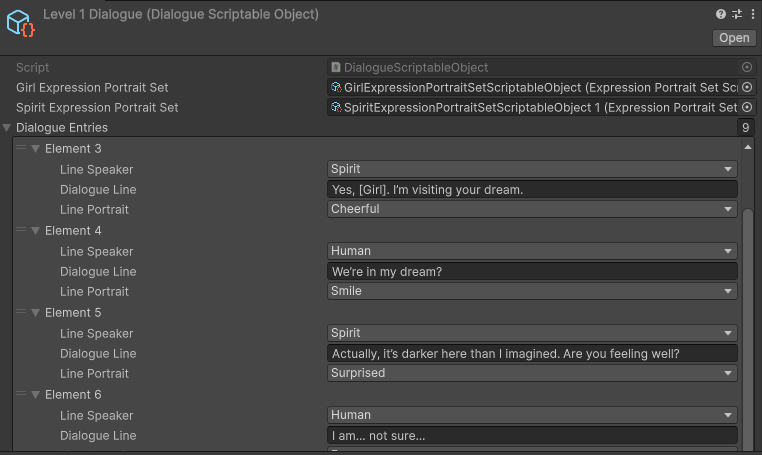
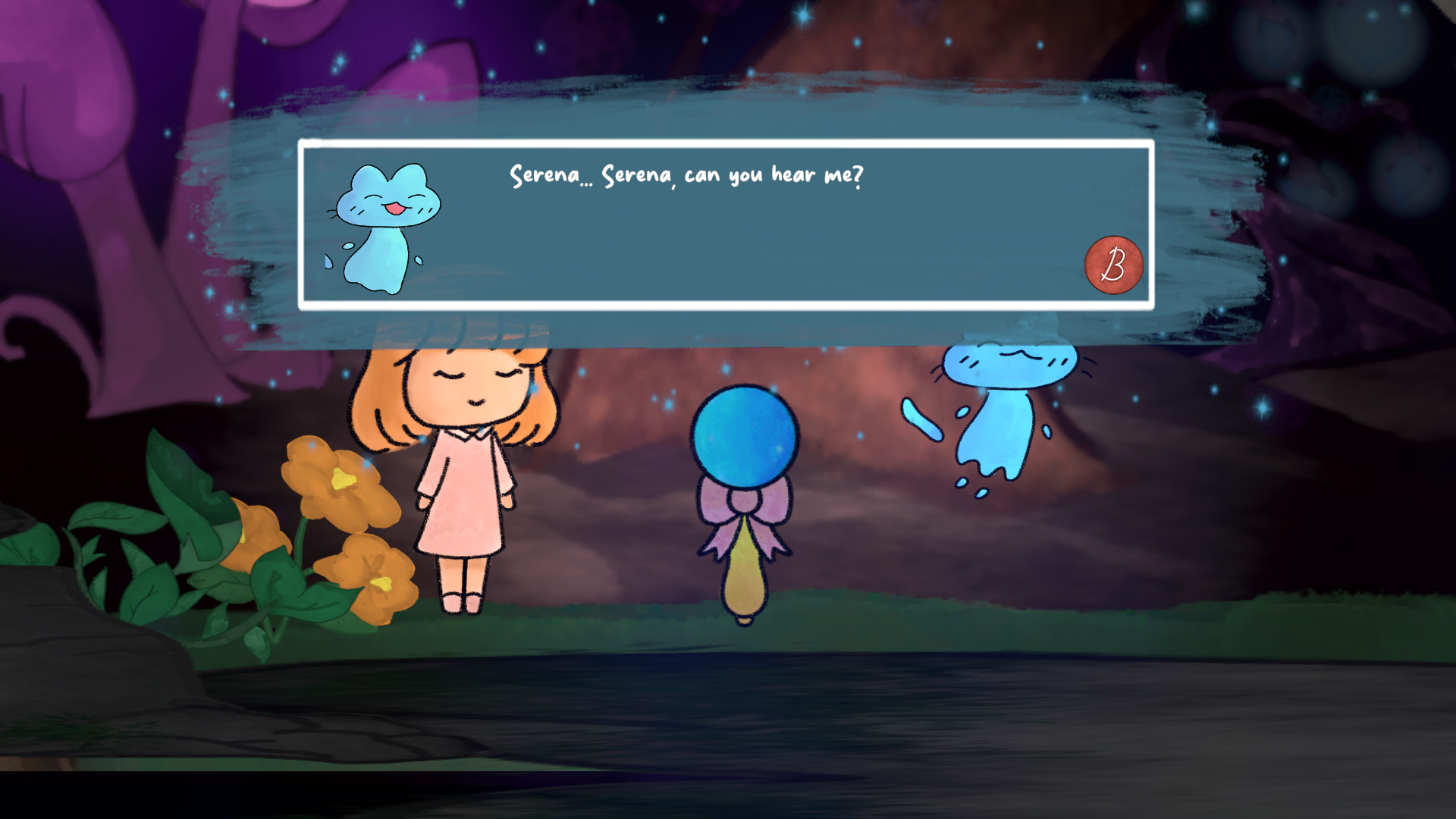
I built a customizable and modular dialogue tool for the game. As I was responsible for creating the dialogue itself as well, I created this system to make it much easier to adapt myself to requirements quickly and expand the game's content.